
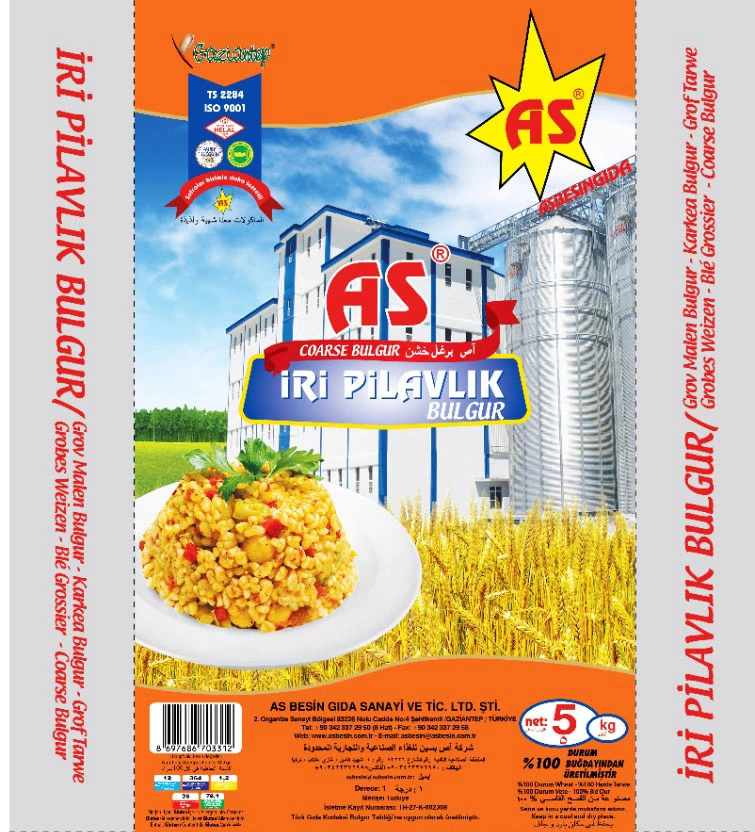




As Bulgur Medium 4x5kg

Beschrijving

As Bulgur Medium — 4 × 5 kg Parboiled, medium-cut bulgur (cracked durum wheat) with a balanced, fluffy texture—ideal for pilafs, salads, and stuffed vegetables. Includes four 5 kg bags (20 kg total). Quick to prepare. Ingredients: durum wheat (gluten). Store cool and dry. read more..

Meer weergeven
Weight 5 kg
Meer weergeven
Width 9 cm
Meer weergeven
Height 33 cm
Meer weergeven
Length 30 cm

As Bulgur Medium — 4 × 5 kg (Total 20 kg)
A versatile staple made from parboiled, cracked durum wheat. The medium cut cooks quickly and holds its shape—perfect for pilafs, grain salads, soups, and large-batch catering. Four individually sealed 5 kg bags help with stock rotation and freshness.

Highlights

  • Medium grade for a light, fluffy texture that’s still hearty

  • Cooks fast; great base for pilafs, salads, stews, and stuffings

  • Pack size: 4 × 5 kg (20 kg total)

Preparation (guide)

  • Simmer method: Rinse. Use ~1 part bulgur to 1.8–2 parts water/broth; simmer 10–12 min, rest covered 5 min, then fluff.

  • Hot-soak method: Rinse. Add 1.5–1.7 parts boiling water; cover 15–20 min, then fluff and season.

Ingredients & Allergen
Durum wheat (gluten).

Storage
Keep in a cool, dry place away from moisture and strong odors; reseal or transfer to an airtight container after opening.

A frequently asked questions page—or an FAQ page for short—is a key part of a knowledge base because it addresses your customers’ most common questions and is useful at all stages of the customer journey. FAQs start with a question and then provide a concise answer. A frequently asked questions page—or an FAQ page for short—is a key part of a knowledge base because it addresses your customers’ most common questions and is useful at all stages of the customer journey. FAQs start with a question and then provide a concise answer. A frequently asked questions page—or an FAQ page for short—is a key part of a knowledge base because it addresses your customers’ most common questions and is useful at all stages of the customer journey. FAQs start with a question and then provide a concise answer.

FAQs are important for a few reasons, including: Accessibility: Links on an FAQ page guide users through your website, helping them find the information they need at any time. Accuracy: The FAQ page should be a single source of truth, offering customers answers to general questions. Affordability: When customers can get answers themselves, they don’t have to rely on customer service agents. This ultimately lowers payroll costs. The purpose of an FAQ page is to provide quick answers to common questions that your business can anticipate. Companies should continuously expand this resource as they acquire more data.

Businesses have multiple strategic locations where they can publish FAQ pages to maximize accessibility and customer satisfaction. The most common and effective approach is creating a dedicated FAQ section on your company website, typically accessible through the main navigation menu or footer links. This central location serves as a comprehensive resource that customers can reference at any time, reducing support ticket volume and improving user experience.

LOREM IPSUM TITLE

LOREM IPSUM CONTENT

FAQ

A frequently asked questions page—or an FAQ page for short—is a key part of a knowledge base because it addresses your customers’ most common questions and is useful at all stages of the customer journey. FAQs start with a question and then provide a concise answer. A frequently asked questions page—or an FAQ page for short—is a key part of a knowledge base because it addresses your customers’ most common questions and is useful at all stages of the customer journey. FAQs start with a question and then provide a concise answer. A frequently asked questions page—or an FAQ page for short—is a key part of a knowledge base because it addresses your customers’ most common questions and is useful at all stages of the customer journey. FAQs start with a question and then provide a concise answer.

FAQs are important for a few reasons, including: Accessibility: Links on an FAQ page guide users through your website, helping them find the information they need at any time. Accuracy: The FAQ page should be a single source of truth, offering customers answers to general questions. Affordability: When customers can get answers themselves, they don’t have to rely on customer service agents. This ultimately lowers payroll costs. The purpose of an FAQ page is to provide quick answers to common questions that your business can anticipate. Companies should continuously expand this resource as they acquire more data.

Businesses have multiple strategic locations where they can publish FAQ pages to maximize accessibility and customer satisfaction. The most common and effective approach is creating a dedicated FAQ section on your company website, typically accessible through the main navigation menu or footer links. This central location serves as a comprehensive resource that customers can reference at any time, reducing support ticket volume and improving user experience.